Top Qs
Timeline
Chat
Perspective
Panipuri
Indian street food From Wikipedia, the free encyclopedia

Remove ads
Panipuri (also known by various regional names) is a deep-fried breaded hollow spherical shell, about 1 inch (25 mm) in diameter, filled with a combination of potatoes, raw onions, chickpeas, and spices. It is a common snack and street food in the Indian subcontinent. It is often flavoured with chilli powder, chaat masala, herbs, and other spices.[citation needed]
Remove ads
Names
The word pani means 'water', referring to the watery chutney used in the dish, and puri refers to rounds of deep-fried dough. The term pani puri is used in Mumbai. The dish is called golgappa in Delhi, phuchka in Kolkata, and pani ke patashe (also spelt batashe) in Uttar Pradesh.[1] It is known by many other regional names in the Indian subcontinent:
Remove ads
Preparation and serving
Summarize
Perspective

The puri used in panipuri is made using a thin circle of dough, about 1 inch (25 mm) in diameter, which inflates when frying to form a hollow spherical shell. The puri is punctured using a finger, then quickly filled with a filling and submerged in watery chutneys. It is then eaten by hand in one bite.[1]
The filling may contain mashed potato, chopped onion, peas, or sprouts. The chutneys used are a sour tamarind chutney and a spicy coriander leaf chutney, which are often chilled. Regional variations differ based on filling or the type of flour used in the puri, which may be maida, atta, or sooji. Upscale restaurants have developed versions with unusual ingredients, such as using guacamole as a filling or flavoured vodka as the water.[1]
The brown water is known throughout India as khatta meetha pani, which translates to as "sweet and sour water". The main composition of this water is tamarind and jaggery. The hotter alternative to this water, which is also typically the standard dipping green liquid for this dish, is known as theeka pani, which means "spicy water". It consists of herbs like mint and coriander along with green chillies. Both waters can include a garnishing of boondi, a concoction made of fried chickpea flour. Some regional variations also use sweet flavours like fruit juices or dates, as well as many optional toppings like sev.[citation needed]
Panipuri is a chaat, a broad category of small snacks combining multiple ingredients, which are consumed in the early evening. Like other chaats, it is typically served by street food vendors, though versions also exist at restaurants. Street vendors of the dish, known as pani puri wallas, each use their own recipes and serve panipuri by each customer's order.[1]
Remove ads
History
According to culinary anthropologist Kurush Dalal and Krivi Pathella, chaat originated in the North Indian region of what is now Uttar Pradesh.[1] The origins of golgappa trace back to India. He also noted that it possibly originated from Raj-Kachori: an accidentally-made smaller puri giving birth to panipuri.[3][better source needed] Panipuri spread to the rest of India mainly due to the migration of people from one part of the country to another in the 20th century.[1]
During the COVID-19 lockdown in India, homemade panipuri became popular as street foods were not available. In the five weeks following the first lockdown order on 25 March 2020, Google searches for panipuri recipes doubled, and the food was a common topic on social media.[1]
Variations

Panipuri has evolved significantly over time. The dish consists of a small, hollow, fried wheat and/or semolina shell filled with spiced mashed potatoes and served with either a green or a brown-coloured dipping water; or both. This "water" is technically a diluted chutney. Over time, variations of the filling and the flavoured water emerged, reflecting the regional preferences and availability of ingredients.[citation needed]
The panipuri in the town of Bangarapet, Karnataka, is renowned for its distinctive white-coloured pani. This recipe has been served by a vendor called Ramesh Chit Chat since the 1970s.[4]
Remove ads
Consumption
Panipuri is popular in both urban and rural areas and among all ages and social classes. Stores sell pre-packaged puri shells for panipuri. Ready-to fry puri has also been available since around 2020.[1]
Gallery


 Sooji puri used in panipuri
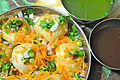 Homemade panipuri


See also

Wikimedia Commons has media related to Panipuri.
Notes
References
Wikiwand - on
Seamless Wikipedia browsing. On steroids.
Remove ads