Top Qs
Timeline
Chat
Perspective
Faridkot district
District of Punjab in India From Wikipedia, the free encyclopedia

Remove ads
Faridkot district is a district lying in the South-Western part of Punjab, India with Faridkot city as the district headquarters.
.svg)

Remove ads
Etymology
The district is named after its headquarters, Faridkot city, which in turn is named in the honor of Baba Farid, who was a Sufi saint and a Muslim missionary. The town of Faridkot was founded during the 13th century as Mokalhar by Raja Mokalsi, the grandson of Rai Munj, a Bhatti Chief of Bhatnair, Rajasthan. According to popular folklore, the Raja renamed Mokalhar to Faridkot after Baba Farid paid a visit to the town. It remained the capital during the reign of Mokalsi's son Jairsi and Wairsi.
Remove ads
History
The region was a self-governing princely state during the British Raj. Before independence, most of the area was ruled by the Sikh Maharaja of Faridkot,[2] while the Jaito pargana, consisting of 16 villages, was part of Nabha State.[3]
In 1947–48, both states acceded to the Dominion of India and became part of the PEPSU in 1948. Faridkot was made a tehsil of Bathinda district. In 1956, PEPSU was merged into Punjab.[4][5]
Faridkot was carved out as a separate district on 7 August 1972, comprising Faridkot tehsil (from Bathinda district ) and Moga and Muktsar tehsils (from Ferozepur).[6] In November 1995, the district was trifurcated: Moga and Nihal Singh Wala tehsils were formed into the new Moga district, while Muktsar tehsil was granted the status of a separate district.[7][8][9]
Remove ads
Location, area & Administration
Faridkot district is surrounded by district Ferozepur in the North-West, Muktsar in the South-West, Bathinda in the South, and Moga in the East.
The District covers an area of 1469 km2 which is 2.92% of the total area of the State and accommodates a population of 552,466, which is 2.27% of the total population of the State.
It has three Subdivisions/ Tehsils namely Faridkot, Kotkapura and Jaito and a Sub Tehsil namely Sadiq comprising a total of 171 villages. Faridkot District has two development blocks namely Faridkot and Kotkapura.
In 2020, Faridkot has been made new police division. Earlier, Faridkot was part of Ferozepur police division. Moga and Mukatsar districts were also attached with Faridkot police division.
Politics
Overview
The Faridkot district contains 2 Cities Faridkot, Kotkapura. More than 7 towns/villages are quite notable in the Faridkot area such as Jaitu, Bajakhana, Panjgarain Kalan, Deep Singh Wala, Golewala, Jhok Sarkari, Doad, Ghugiana, Sadiq, Chand Bhan, etc. Faridkot is a hub for premier educational institutions. North India's only Medical University i.e. Baba Farid University of Health Sciences is also named after Baba Farid besides Guru Gobind Singh Medical College, Engineering and Dental Colleges.
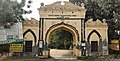 Entrance of Farmer's House Faridkot
 Foundation Stone of Harindra - Civil Hospital Faridkot
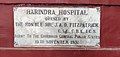 Foundation Stone of Harindra - Civil Hospital Faridkot
 Foundation stone of Govt. School of Bargari (Faridkot)
 Entrance of District Court Faridkot
 Foundation Stone of Davies Model Agricultural Farm and Farmers's House Faridkot
 Govt. Brijindra College Faridkot
 Govt.Brijindra College Faridkot


Remove ads
List of villages
- Ahel
- Arayianwala Kalan
- Arayianwala Khurd
- Aulakh
- Bageana
- Bajakhana
- Bargari
- Beguwala
- Behbal kalan
- Behbal khurd
- Bhag Singh wala
- Bhagthala Kalan
- Bhagthala Khurd
- Bhairon-Ki-Bhatti
- Bhana
- Bihlewala
- Bholuwala
- Bir Bholuwala
- Bir Chahal
- Bir Sikhanwala
- Burj Jawahar Singh Wala
- Burj Masta
- Buttar
- Chahal
- Chak Dhudi
- Chak Kalyan
- Chak Sahu
- Chak Seman
- Chak Shama
- Chambeli
- Chand baja
- Chaina
- Chet Singh Wala
- Chugewala
- Dabrikhana
- Daggo Romana
- Dallewala
- Dana Romana
- Dawareana
- Deep Singh Wala
- Deviwala
- Dhab Sher Singh Wala
- Dhaipai
- Dhilwan Kalan
- Dhilwan Khurd
- Dhimanwali
- Dhudi
- Dhurkot
- Dod
- Faridkot (Rural)
- Ghaniewala
- Ghoniwala
- Ghuduwala
- Ghugiana
- Ghumiara
- Gondara
- Golewala
- Gurusar
- Hardialeana
- Hari Nau
- Hariewala
- Hassan Bhatti
- Jalaleana
- Jand Sahib
- Jandwala
- Janerian
- Jeonwala
- Jhakhar Wala
- Jhariwala
- Jhok Sarkari
- Jhotiwala
- Kabalwala
- Kaler
- Kamiana
- Kanianwali
- Kauni
- Khara
- Khilchi
- Kingra
- Koharwala
- Kot Sukhia
- Kotha Guru
- Kothe Kehar Singh
- Lambwali
- Machaki Kalan
- Machaki Khurd
- Machaki Mal Singh
- Malla
- Mallewala
- Mandwala
- Mani Singh Wala
- Marahar
- Matta
- Maur
- Mehmuana
- Midu Maan
- Mishriwala
- Moranwali
- Mumara
- Nangal
- Naraingarh
- Nathalwala
- Nathewala
- Pakhi Kalan
- Pakhi Khurd
- Pakka
- Panjgrain Kalan
- Pehluwala
- Phide Kalan
- Phide Khurd
- Pindi Balochan
- Pipli (Village)
- Qila Nau
- Rajowala
- Ratti Rori
- Rupianwala
- Sadhanwala
- Sadhuwala
- Sadiq
- Saideke
- Sandhwan
- Sangatpura
- Sango Romana
- Sangrahur
- Sarawan
- Sher Singh Wala
- Sibbian
- Sikhanwala
- Simrewala
- Sirsari
- Sukhanwala
- Tehna
- Thara
- Virewala Kalan
- Virewala Khurd
- Wander Jatana
- Wara Daraka
- Rorikapura
Remove ads
Demographics
Summarize
Perspective
According to the 2011 census Faridkot district has a population of 617,508,[10] roughly equal to the nation of Solomon Islands[11] or the US state of Vermont.[12] This gives it a ranking of 519th in India (out of a total of 640).[10] The district has a population density of 424 inhabitants per square kilometre (1,100/sq mi).[10] Its population growth rate over the decade 2001-2011 was 12.18%.[10] Faridkot has a sex ratio of 889 females for every 1000 males,[10] and a literacy rate of 70.6%. Scheduled Castes made up 38.92% of the population.[10]
Gender
The table below shows the sex ratio of Faridkot district through decades.
The table below shows the child sex ratio of children below the age of 6 years in the rural and urban areas of Faridkot district.
Religions
The table below shows the population of different religions in absolute numbers in the urban and rural areas of Faridkot district. Note:- The separation of Moga and Muktsar district from Faridkot in 1995 caused significant changes in the population numbers after that year.


.svg)

Languages
At the time of the 2011 census, 91.79% of the population spoke Punjabi and 6.91% Hindi as their first language.[27]
Remove ads
Health
Summarize
Perspective
The number of registered doctors in the Faridkot district were 1,345 and 2,997 registered nurses, as of year 2018.[28][29]
The table below shows the data from the district nutrition profile of children below the age of 5 years, in Fridkot, as of year 2020.
The table below shows the district nutrition profile of Fridkot of women between the ages of 15 and 49 years, as of year 2020.
The table below shows the current use of family planning methods by currently married women between the ages of 15 and 49 years, in Faridkot district.
Remove ads
Notes
- 1931-1941: Including Ad-Dharmis
References
External links
Wikiwand - on
Seamless Wikipedia browsing. On steroids.
Remove ads