Top Qs
Timeline
Chat
Perspective
Kudi Chin
Historic neighbourhood in Bangkok From Wikipedia, the free encyclopedia

Remove ads
Kudi Chin (Thai: กุฎีจีน, pronounced [kūdīː tɕīːn]) or Kadi Chin (กะดีจีน, [kādīː tɕīːn]), also spelled "Kudee Jeen", etc. is a historic neighbourhood in Bangkok. It is in Wat Kanlaya Sub-district, Thon Buri District, on the west bank of the Chao Phraya River, south of Bangkok Yai Canal. The neighbourhood, dating to the Ayutthaya period, includes communities of several faiths living in close proximity. Today, it is best known for the Catholic community (mainly of Portuguese descendants) around Santa Cruz Church, but the wider neighbourhood also includes the areas around Wat Kanlayanamit, Kudi Khao Mosque, and the Chinese Kuan An Keng Shrine. Conservation and revitalization efforts beginning in 2008 have made the neighbourhood a cultural tourism destination.
.jpg)
Remove ads
History
Summarize
Perspective
The neighbourhood, dating to the Ayutthaya period, includes communities of several faiths living in close proximity.[1] It can be divided into a total of six communities, which consists of people of various races including Thai Buddhists, Mon, Chinese, Portuguese and Thai Muslims.
For the Portuguese, they received the plot of land from the King Taksin in this area. They emigrated from Ayutthaya after fell in 1767, along with other ethnic groups. Later in 1769, there was a construction of a Catholic church called Santa Cruz Church as it appears today. Their land is considered a land under the administration of Roman Catholic Archdiocese of Bangkok from the past. Therefore, absolutely do not resell or transfer ownership to third parties. There are three types of land and church like this in Bangkok Metropolitan Region, in addition to the Kudi Chin, including Holy Rosary Church in Talat Noi, Immaculate Conception Church in Sam Sen, and Immaculate Heart of Mary Church in Phra Pradaeng, Samut Prakan.[2]
Today, it is best known for the Catholic community (Portuguese descendants), in 2014, they have a population of about 1,850 people in 293 households[3]) around Santa Cruz Church, but the wider neighbourhood also includes the areas around Wat Kanlayanamit, Kudi Khao Mosque, and the Chinese Kuan An Keng Shrine. All linked to each other by bicycle lane and promenade along the Chao Phraya River. Conservation and revitalization efforts beginning in 2008 have made the neighbourhood a cultural tourism destination.[4][5][6][7]
The symbol of this community is rooster which is adapted from Rooster of Barcelos, or Galo de Barcelos in Portuguese, which is the national emblem of Portugal to indicate the roots of the community.[2]
Its name "Kudi Chin" or "Kadi Chin" meaning "Chinese monk's dwelling", refers to Santa Cruz Church, also known as Kudi Chin. However, it has an explanation that should refer to the Chinese temple on the Chao Phraya River that had been built since the Ayuthaya period. Until the time passed to Thonburi and Rattanakosin periods, it has deteriorated. Therefore being rebuilt as the current Kuan An Keng Shrine.[2]
Remove ads
Sights
Summarize
Perspective
Beside church and temples, Kudi Chin also has many interesting things:
- Baan Kudichin Museum, the three-story renovated wooden house of community leader is a learning center stories about the history of community, the ground floor is a café and souvenir shop for visitors, while the second and third floors exhibit objects used in the past, the way of life and faith, Portugal–Thailand relations, Thai loanwords from Portuguese language, and the origin of the Siamese–Portuguese, as well as old photographs of the community. Moreover, on the roof top is also used as a viewing point and taking photos of the surrounding scenery community and panoramic views of Chao Phraya River.[8] The museum open for free admission on Tuesday–Sunday from 09.00 am to 06.00 pm.[9]
- Windsor House, an antique house on the Chao Phraya River behind community, the original owner was Louis Windsor, a wealthy British merchant who owned Windsor Shop on Charoen Krung Road. Noted for its elegant decay and detailed fretwork, the gingerbread house was built in a style popular in its time.
- Baan Phattayakosl, the Phattayakosol family is a well-known clan that have contributed much to Thai traditional music since the early Rattanakosin period. The family researched and produced Thai instruments and composed and taught music. Over many generations, they have amassed a treasure trove of Thai traditional instruments and have it displayed in this museum.
- Jantanaphap Thai House, a Thai house, Victoria aged over 120 years built in the reign of King Chulalongkorn (Rama V), made of all teak. This house take from Chanthaburi and brought it to build in Kudi Chin. Interior with Victoria style cabinets. Carved Chinese design on windows and doors. A glass window also shows signs of bullet from the Manhattan Rebellion in 1951.
The highlight of this community is khanom farang kudi chin, a rare traditional Thai snack influenced by Portuguese sweets since the Ayutthaya period. It is dubbed the "Sino-Portuguese snack" or "first Thai cake," and there is a saying that eating this snack is like tasting history. Currently, only three households still make and sell this homemade delicacy.[2]
In addition, papier-mâché piggy banks and wooden guandao (Chinese crescent blades) are local craft souvenirs. The wooden guandao is a toy modeled after the equipment used in Chinese opera. At least 60–70 years ago, during the annual Chinese New Year festival held at Wat Kanlayanamit, wooden guandaos were very popular. Visitors often bought them as souvenirs or children persuaded their parents to buy them as toys, proudly claiming they had come to the festival. Like khanom farang kudi chin, today only one manufacturer remains, who is the heir of the original producer.
Papier-mâché piggy banks, on the other hand, are a more recent creation. Inspired by the pigs that used to roam near Wat Prayurawongsawat, which people often caught for food, locals transformed the idea into a souvenir product. Although the pigs have long disappeared, the craft remains as a creative nod to the past.
Remove ads
Gallery
 Chic graffiti on the wall in 2017
 Another chic graffiti
 The condition of the community houses
 Narrow path leading to Thanusingh Bakery House
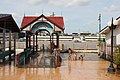 Kudi Chin during 2011 great floods
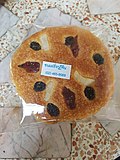 Khanom farang kudi chin
 Santa Cruz Church and pier in night time
 Windsor House
 Kuan An Keng Shrine, the shrine of Goddess Guanyin and the origin of community's name
.jpg)
.jpg)
.jpg)
.jpg)
.jpg)
.jpg)


References
Wikiwand - on
Seamless Wikipedia browsing. On steroids.
Remove ads