Top Qs
Timeline
Chat
Perspective
Natanz
City in Isfahan province, Iran From Wikipedia, the free encyclopedia

Remove ads
Natanz (Persian: نطنز)[a] is a city in the Central District of Natanz County, Isfahan province, Iran, serving as capital of both the county and the district.[4] It is 70 kilometres (43 mi) south-east of Kashan.


Remove ads
Demographics
Population
At the time of the 2006 National Census, the city's population was 12,060 in 3,411 households.[5] The following census in 2011 counted 12,281 people in 3,829 households.[6] The 2016 census measured the population of the city as 14,122 people in 4,564 households.[2]
Nuclear facility
Natanz nuclear facility is part of Iran’s nuclear program. It is located some 33 km NNW from the town (33°43′N 51°43′E) near a major highway, is generally recognized as Iran's central facility for uranium enrichment.[7]
Geography
Summarize
Perspective
Location
Natanz is located 120 km northeast of Isfahan and on the main north-south highway of Iran. Its altitude is 1666 meters above sea level. The distance between Tehran and Natanz is 326 km, and it takes about 4 hours by car.[citation needed] The Karkas mountain chain (Kuh-e Karkas) (meaning mountain of vultures), at an elevation of 3,899 meters, rises above the town.[8]
Climate
The average temperature of the city is 15.5 degrees Celsius and the average annual rainfall is 195 mm.[9][10]
Agriculture
Saffron
Natanz saffron is one of the agricultural products of Natanz city, which is compatible with the climate of this region. Natanz saffron is of good quality and most of this product is exported.[16] Because Natanz city has three different types of climate, saffron cultivation in this area has given good results, so that some years it has yielded more than 1600 kg of dry saffron.[17]
Garden produce
Currently, the economy of Natanz is in the field of agriculture, people make a living by producing garden products such as pears, beets, walnuts, pomegranates and saffron.[18] Its pear fruits are well known.[19]
Remove ads
Historical monuments
It is known as the shrine of Abd as-Samad.[19] Elements in the present complex date from 1304 with subsequent additions and restorations, such as the Khaneqah and Muqarnas vault. The tomb honors the Sufi Sheikh Abd al-Samad, and was built by the Sheikh's disciple, the Ilkhanid vizier Zain al-Din Mastari.[citation needed]
Gallery
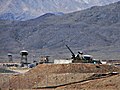 Anti-aircraft guns guarding Natanz nuclear facility
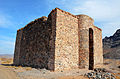 Natanz Stone Fortress
 Natanz mosque next to the old Chenar
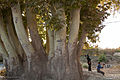 Ancient tree of Natanz
 Portal of Abd al-Samad complex


.jpg)
.jpg)
See also
 Media related to Natanz at Wikimedia Commons
Notes
References
External links
Wikiwand - on
Seamless Wikipedia browsing. On steroids.
Remove ads