Top Qs
Timeline
Chat
Perspective
Wehe-den Hoorn
Village in Groningen, Netherlands From Wikipedia, the free encyclopedia

Remove ads
Wehe-Den Hoorn (Gronings: t Hörn-Wij) is a village in the Dutch province of Groningen. It is part of the municipality of Het Hogeland. It is a 1966 merger of the villages of Wehe and Den Hoorn.[3]


Remove ads
History
Wehe was a terp (artificial mount) village on the road from Ulrum to Winsum.[3] It was first mentioned in the 10th or 11th century as UUie and means temple (similar to Wye in Kent).[4] Den Hoorn was a nearby hamlet. A portion of the population remained Roman Catholic.[3] Each year, several processions start in Wehe-den Hoorn to the Sorrowful Mother of Warfhuizen.[5] The Dutch Reformed Church dates from 1553. The Catholic Saint Boniface Church, designed by Joseph Cuypers and his son Pierre Cuypers and completed in 1927, houses a Mary statue from the 16th century.[3]
In 1679, the estate Borgweer was built near Wehe. Later it became the property of the Tjarda van Starkenborgh family who renamed it Starkenborgh. It was torn down in 1832, and only a path remained which used to be a long driveway to the estate.[6]
In 1795, Wehe was home to 327 people.[7] It became part of the municipality of Leens, however the town hall was in Wehe.[5] The villages of Wehe and Den Hoorn had merged into a single entity. In 1966, the villages were officially merged and named Wehe-den Hoorn.[3] In 2019, it became part municipality of Het Hogeland.[5]
Remove ads
Notable people
- Louwe Huizenga (1893–1973), long-distance runner who set the marathon record in 1915[8]
Gallery
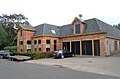 Former tram station
 Procession in Wehe-den Hoorn
 Hoornsevaart
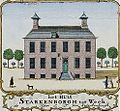 Former Starkenborgh estate


References
Wikiwand - on
Seamless Wikipedia browsing. On steroids.
Remove ads