Kitchen
space primarily used for preparation and storage of food From Wikipedia, the free encyclopedia

Remove ads
The kitchen is the room in the house where food is cooked. Sometimes, people eat in their kitchens, too. Hotels, schools, and places where people work often have kitchens as well. A person who works in a kitchen in one of these places may be a kitchen worker or a chef (depending on where he/she cooks).
 | This article's tone or style may not be appropriate for Wikipedia. Specific concerns may be found on the talk page. |
 | This article needs more sources for verifiability. |
Remove ads
History
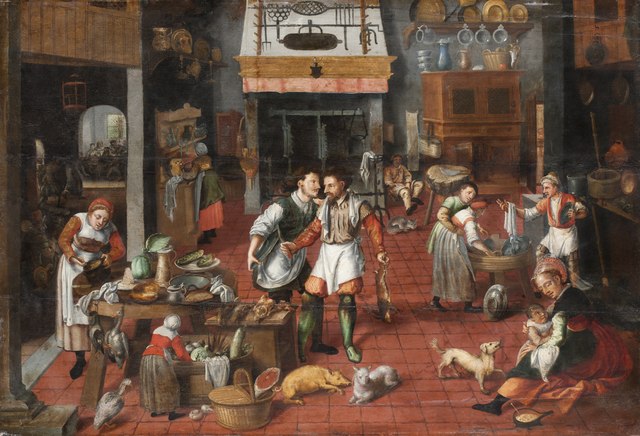
Kitchens have evolved significantly over time. Early kitchens were basic areas with open fires for cooking, often separate from the living areas due to the smoke. In the Middle Ages, larger homes featured separate kitchens with chimneys.
The Industrial Revolution brought advancements like cast iron stoves, which made kitchens more efficient. By the 20th century, kitchens became central to homes, equipped with gas and electric stoves, refrigerators, and sinks with running water.
Modern kitchens combine cooking and social spaces. They often form part of open-plan living areas.
Remove ads
Types
Kitchens can vary in size, layout, and purpose. Common layouts include:
- L-shaped kitchens: Popular for small spaces, offering two connecting walls for work areas.
- U-shaped kitchens: Efficient for cooking, providing workspace on three sides.
- Galley kitchens: Narrow and compact, often used in apartments.
- Open-plan kitchens: Integrated with living or dining areas, creating a communal space.
Outdoor kitchens are also common in warm climates and are used for barbecues and social gatherings.[1][2] They might include grills, sinks, and/or storage. Usually they are located near a water source.
Remove ads
Key elements
A typical kitchen includes the following elements.
- Appliances: Stoves, ovens, refrigerators, and dishwashers.
- Workspaces: Countertops and islands for food preparation.
- Storage: Cabinets, shelves, and pantry areas for food and utensils.
- Lighting: Task lighting for preparation areas and ambient lighting for aesthetics.
Modern kitchens often include smart appliances, such as refrigerators with touchscreens or ovens controlled via smartphone apps.
Kitchen trends
Current kitchen trends[where?] include:
- Sustainability: Using eco-friendly materials like bamboo and reclaimed wood.
- Minimalism: Clean lines, open shelving, and clutter-free spaces.
- Smart Kitchens: Featuring energy-efficient appliances and voice-activated controls.
- Multi-functional Spaces: Combining cooking areas with dining and entertainment spaces.
Cultural variations
Kitchen designs differ around the world:
Renovating kitchens
Renovating a kitchen can improve functionality, energy efficiency, and aesthetics. Popular renovations include adding islands, upgrading appliances, and improving storage.[3]
References
Wikiwand - on
Seamless Wikipedia browsing. On steroids.
Remove ads