Top Qs
Timeline
Chat
Perspective
Fakkham script
Brahmic script From Wikipedia, the free encyclopedia

Remove ads
The Fakkham script (Thai: อักษรฝักขาม, "Tamarind pod-script") or Thai Lanna script is a Brahmic script, used historically in the Lan Na Kingdom. The script was frequently used in Lan Na stone inscriptions.
Remove ads
Origin
The Fakkham script, was derived from the old Sukhothai script (also known as Proto-Thai script), and used extensively in Lan Na between the beginning of the 15th century and the end of the 16th century.[1] The Fakkham script was possibly introduced to Lan Na by a religious mission from Sukhothai.[2] The script was named after its similarity to the shape of tamarind pods,[3] because the letters became elongated and somewhat more angular rather than square and perpendicular like its ancestor the Sukhothai script. Several letters had noticeable "tails" extending above and below the main writing line.[4]
Remove ads
History
Summarize
Perspective
The Fakkham script was used extensively in the territories controlled by the kings of Chiang Mai, the Lan Na kingdom, between the beginning of the fifteenth and the end of the sixteenth centuries.[5] It has been speculated that the Fakkham script was the official script of Lan Na and other northern kingdoms, since the script was used in diplomatic notes of the Lan Na kingdom sent to China.[6] The Lan Na kingdom used the Fakkham script as their secular script used for official inscriptions, important letters and other documents, while the Tai Tham script was used for religious texts.[3]
A number of ancient inscriptions in the script have been discovered in the Bo Kaeo, Luang Nam Tha and Sayabouri provinces of Laos.[5] The Fakkham script can be found on various royal steles around Vientiane, dating from the beginning of the second quarter of the 16th century.[1]
The Fakkham script can be considered the prototype for the Lao script.[1] It has been suggested that the script is the source of the White, Black, and Red Tai writing systems found in eastern Yunnan, northern Laos, and Vietnam.[4]
 Stone inscription in Fakkham script from Thailand
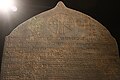 The Wat Chiang Man inscription (CM1) in Fakkham script
 The Wat Lam Chang Inscription in Thai Lanna alphabet, 1444.


Remove ads
Characteristics
Summarize
Perspective
The Fakkham script has 41 consonants, 22 vowels, 10 numerals and 6 kinds of diacritics. Words are written by adding a final consonant, vowel, diacritic or all three, to an initial consonant.[7]


- Notes
- (1) Jom Tham inscription, 1502 CE, line 8, word suk̯kha; (2) Inscription no. 31 (Nn. 238), line 12, word duk̯kha
- Suntornaram inscription 1, 1615 CE, line 17, word aṅka
- Borrowed or adapted from Lanna Dhamma script
- Wat Phra That Lampang Luang inscription 3, 1796 CE, side 1 line 16, word samadejja
- Suntornaram inscription, 1616 CE, line 5, word paññā
- Hansadawadi Sri Satyadhithan inscription, c. 1457 CE, side 1 line 14, word satyādhiṭṭhāna
- Pa Tap Madao inscription, c. 1457 CE, lines 4 & 8, word daṇḍa
- Wat Phra That Lampang Luang inscription 3, 1796 CE, side 2 line 9, word desadabāna
- (1) Wat Buppharam inscription, 1529 CE, line 2, word āsāṭha; (2) Wat Sri Suphan inscription, 1509 CE, side 1 line 16, word āsāṭha
- Suntornaram inscription, 1616 CE, line 1, word titthī
- Seen in many inscriptions: Wat Phra That Lampang Luang 3 (1796 CE); Suwannaprasat (1804 CE); Buppharam (1529 CE); Sutrarama (1615 CE), etc.
- Kangsadan inscription, 1860 CE, line 9, word pen
- Wat Phra That Lampang Luang inscription, 1796 CE, line 5, word trāba
- (1) Wat Phra That Lampang Luang inscription, 1796 CE, line 8, word theppadā; (2) Wat Chettuphon inscription, 1916 CE, line 19, word krungthep
- Borrowed or adapted from Thai Nithet script
- Resembles Khom Thai script
- (1) Wat Phra That Lampang Luang 3, 1796 CE, side 2 line 5, word kamchū; line 9, word phromma; (2) Suntornaram 1, 1615 CE, line 10, word uttamma
- Inscription no. 29 (Nn. 237)
- Influence from standard Thai or Pali-Sanskrit
- Suwannaram inscription 1, side 1 line 1, word chalū
- Wat Chettuphon inscription, 1916 CE, line 16, word mūlla
Ho nam consonants (leading-h clusters)


Vowels


Remove ads
Numerals
Fakkham numerals are very similar to both Lanna Tham numerals and modern Lao numerals. The digits 7 and 9 each have two common variant forms that are used interchangeably.[8]


Notes
- Influence from standard Thai or Pali-Sanskrit
- Kangsadan inscription, 1860 CE
- Hypothetical spelling used only to illustrate vowel and final-consonant placement
- (1) Wat Buppharam inscription, 1529 CE, line 3, word pheṅ; (2) Wat Sri Koet inscription, 1809 CE, side 2 line 7, word hlek; (3) Wat Chettuphon inscription, 1916 CE, word phej (diamond)
- Wat Chettuphon inscription, 1916 CE
- Inscription no. 29 (Nn. 237)
- Hariphunchai inscription, 1500 CE, side 1 line 11, word hṛdaya
- Hariphunchai inscription, 1500 CE, side 1 line 2, word mṛkaśira; side 2 line 10, word pṛkṣa
- Wat Phra That Lampang Luang inscription 3, 1796 CE, side 1 line 7, word karralong
- (1) Hariphunchai inscription, 1500 CE, side 1 line 4, word varddhamāna; multiple instances of dhamma etc.; (2) Wat Sri Suphan inscription, 1509 CE, side 1 line 1, word phipharathamangkala
Remove ads
References
External links
Wikiwand - on
Seamless Wikipedia browsing. On steroids.
Remove ads